John and Mary's Private Family History Web Site

HOME Logout

Mary's Family Stories

Duncan McIntosh (​1766 - 1837) and Janet McBain

Duncan and Janet are Mary's three times great grand-parents.

Once research goes before the 1841 census there are fewer ways of cross-referencing facts, and we rely on parish baptism and burial records, rather than birth and death records. Many of these parish records are hand-written and often difficult to decipher, and in the Inverness area, names such as Duncan McIntosh and Janet (or Jean or Janette they are interchangeable) are very common. With this apologetic out of the way, what do we know for certain with regard to Duncan and Janet?

•  William McIntosh married Catherine Mitchinson in September 1841 in Hull; on the wedding register William’s father was “Duncan McIntosh, gentleman”. The use of “gentleman” means that he was not employed in manual labour or as an employee in a trade.
•  On William’s baptismal register, dated 12 May 1801, which is from the Congregational Chapel in Hull William’s father was Duncan McIntosh.
•  In the 1841 census, Jean McIntosh (aka Janet), was living with her son William, and a female servant, Eleanor Appleton; Jean is “of independent means”, born in Scotland; William is a “merchant”, born in Yorkshire. They are living in a middle class residential area in Drypool, Hull, with Jean and William having enough funds so that Jean is not working, William is running a business that involves capital risk yet they can employ a servant.
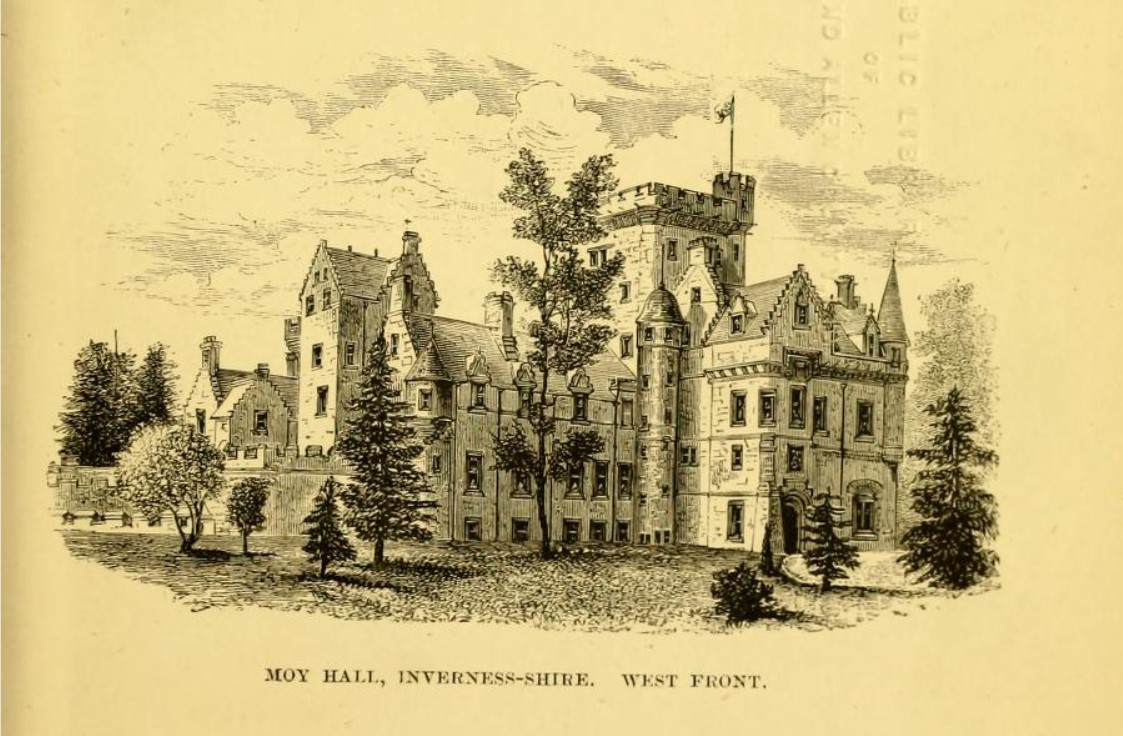
•  Family lore has it that Janet McBain was William’s mother and was from Inverness, and that she worked at Moy Hall.

So my questions are:
 How did a couple from the Inverness area come to live in Hull?
 Where did the money come from to allow widow Janet and son William to live as they did as per the census of 1841?
 Can we prove that Janet did work at Moy Hall, the seat of Clan McIntosh?

The last question is the easiest to answer – no, we can’t! John and Mary visited the Archive Centre in Inverness in May 2026 and the archivist was not aware of any records that could help us. The Moy Hall that Janet may have known was destroyed in 1955 due to dry rot, and replaced with a building that is still the residence of Lady Mackintosh, the mother of the current clan chief, John Lachlan Mackintosh https://en.wikipedia.org/wiki/Moy_Hall. It is not open to the public unless by very special arrangement. There is, however, a postscript to this later! 

 What follows is my theory as to the answers to the first two questions, but it has been constructed with the dubious help of AI and so must be treated with some degree of uncertainty. I have not yet been able to confirm all the sources that have been provided so reader … beware. Also note the Inverness area is the natural habitat of not only Clan McIntosh but also McBain/McBean and that, as I’ve noted earlier, Duncan and Janet (with variations) are common names. So here goes ...

Duncan McIntosh was born and baptised in 1766 in the parish of Dores, 6 miles south-west of Inverness. His father was William McIntosh, and as the tradition was to name the first born son after the paternal grandfather, this gives something of a tenuous link to Duncan and Janet’s son. There are about six possible Janet McBains who could be the Janet so at the moment there is no definite information about her birth or parentage.

Duncan and Janet married on 4 Dec 1795 at Ardersier, a small hamlet 12 miles east of Inverness. Ardersier sits at the base of a peninsula that extends into the Moray Firth and between 1748 and 1769 a massive fortress was built on the peninsula. Called “Fort George” it was built by King George II following the 1745 Jacobite rising and the Battle of Culloden. The Fort still exists and is in use by the British Army.
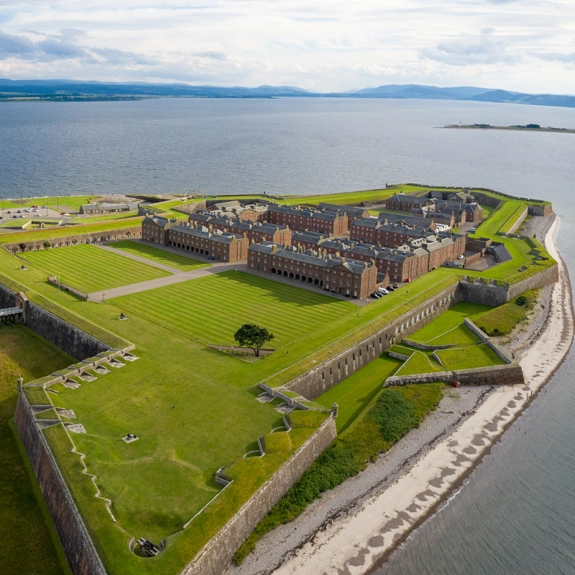
1795, the date of Duncan and Janet’s wedding is significant for two reasons – it sits in the middle of the first set of “clearances” when the crofting folk of the Highlands were expelled from their land to make way for the more profitable sheep; and that the British Army at Fort George were recruiting men to fight in the French Revolutionary Wars. 

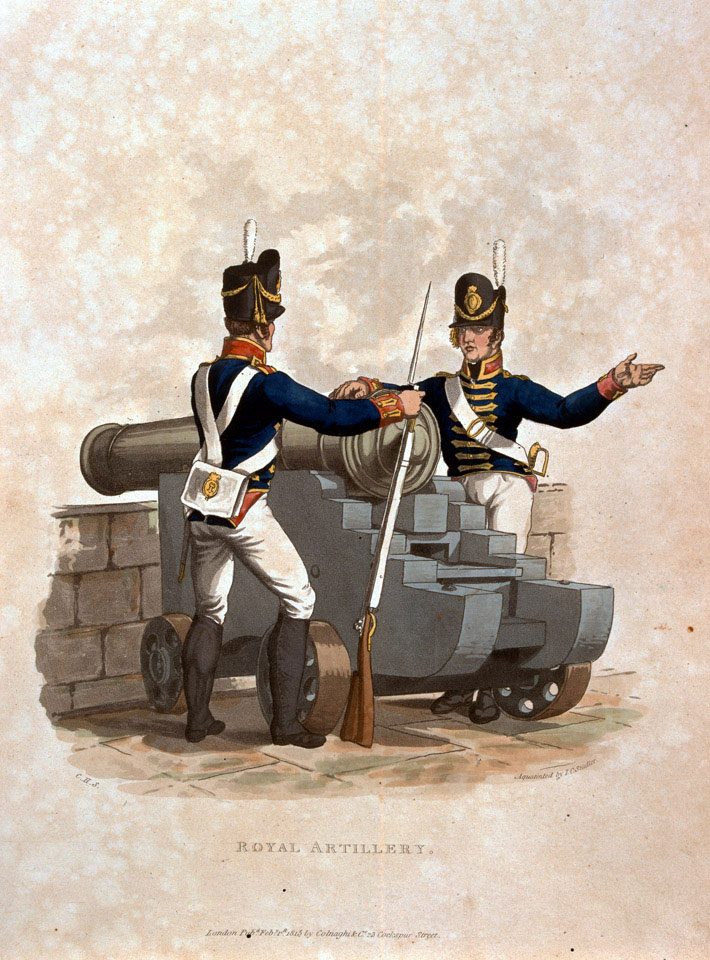
So my theory is that Duncan signed up to avoid the pressures of the clearances and to provide a steady income to support his wife. There are two options here; in one marriage record he became a bombardier in the 4th Battalion of the Royal Artillery; or he may have joined the 78th (Highlanders) Regiment of Foot. Both options give us a high probability of a transfer to the defences of Hull, which as a major trading port on the east coast was a prime target for Napoleon’s navy. The Hull Citadel was at the southern end of the parish of Drypool where we find Janet and her son William in 1841. I am going to take the Royal Artillery option as I feel that it better fits the later facts.

Here is an AI generated timeline for Duncan [with additions and comments by me]:
The Highland Era (1766–1795)

  • 1766: Birth — Born in the parish of Dores, Inverness-shire, to his father, William McIntosh [and mother, Catherine Cunningham]

  • c. 1785–1790: Enlistment — Enlists in the Royal Regiment of Artillery as a young man. He is assigned to the 4th Battalion. He learns advanced numeracy, literacy, and artillery ballistics, rising from Matross to Gunner [a 'matross' was the junior rank below ‘gunner’]

  • c. 1792–1794: Promotion — Promoted to Bombardier (a single-chevron technical NCO [Non-Commissioned Officer]). He may have seen early active service against the French in the Flanders Campaign.

  • Late 1795: Marriage — Stationed at the newly built Fort George. He marries Janet (Jane) McBain in the adjacent village of Ardersier.

The Move to Hull & Early Family Life (1796–1801)

  • c. 1796: Transfer to Yorkshire — Duncan’s artillery company is transferred south to garrison the Hull Citadel in Drypool to protect England's east coast from French naval raids.

  • 1797: First Child — Daughter Christian is born. Duncan and Janet are living "out of barracks" in Holy Trinity parish, Hull. They break away from the Anglican church to baptise her at the Fish Street Independent Chapel.

  • 1799: Second Child — Son James is born in Holy Trinity parish and baptised at Fish Street. (Named after Janet's father, James McBain [we don’t know this]). He likely passes away in early childhood [yes he did].

  • 1801: Third Child — Son William is born in Drypool and baptised at Fish Street Chapel. Named after Duncan’s father, William McIntosh, he becomes the sole surviving male heir.

Later Military Service & The Napoleonic Wars (1801–1815)

  • c. 1801–1814: Active Warfare — As the Napoleonic Wars rage, Duncan’s duties as a Bombardier keep him anchored to the Hull Citadel or deployed to coastal fortifications. During these years of conflict, he secures a share of military prize money (booty from captured enemy ships and stores) [I’m very dubious about this but it would explain where the money came from].

  • c. 1815: Leaving the Army — Following the Battle of Waterloo and the end of the wars, Duncan officially retires from the Royal Artillery after roughly 25–30 years of service.

The Merchant Legacy & Retirement (1816–1830s)

  • c. 1816–1830: Building the Fortune — Rather than returning to Dores, Duncan and Janet permanently settle in Drypool, Hull. Duncan draws a steady Chelsea Out-Pension [pensions were managed by the Royal Hospital Chelsea]. He and Janet pool their military savings and prize money to invest heavily in their only son, William.

  • c. 1831–1835: Death & Burial — Duncan passes away in his late 60s. He is buried in the military-garrison parish of Drypool, St. Andrew. Because his wealth is strictly localised or passed directly via intestacy customs to his family, he leaves no complex York Will [before 1858 a testate or probate record was proved in the church courts of the Province of York.]

  • June 1841: The Final Legacy — Duncan's strategy succeeds completely. On the 1841 Census, his widow Janet and son William are well regarded, middle class, funded by the elite wine-importing empire McIntosh & Webster at 21 High Street—a business built entirely on the capital Duncan secured as a Highland Bombardier.

I’ve yet to confirm Duncan’s military record or his pension record; they are available online but behind a pay-wall unless accessed from a public library or the National Archive.

So let me further theorise that for what ever reason, Duncan and Janet had a relatively small family and so finances were not shed on supporting ten or more children. I’ve found two others, as noted above, and am trying to confirm what happened to them. For me there is still a gap as how the family moved from retired non-commissioned artillery officer – both literate and numerate as part of the Royal Artillery – to being part of a lucrative import/export business dealing mainly in wines and spirits. 21 High Street or Moxon House was a very salubrious building. It may be that Duncan used his money and influence to obtain an apprenticeship for William and then William went into business with Webster. There is no evidence to suggest that Duncan started the business.

The church may have played an important role in this part of their lives. Coming down from Scotland, William and his siblings were baptised at the Fish Street Independent (Congregational) Chapel, which would have been a gathering place for the ex-pat Scottish community in Hull. This chapel also appears to have attracted the local “great and the good” – records show (so I’m told) that the congregation included various merchants, Aldermen, politicians and so on. It therefore shows that Duncan had done really well and so possibly had arranged his son’s apprenticeship through his church connections.

I’m still puzzled and dubious about how much money Duncan had made from his army career and I’m still working on a feeling that he must have done something, for instance, an investment which came good, to fund William’s business. If my theory is correct, however, the prosperity and lifestyle enjoyed by future generations of McIntosh in business started here.


A post-script from the AI: I asked about Janet McBain, Moy Hall and meeting Duncan -

In fact, looking at the geography, clan networks, and the exact timeline of 1795, the claim that Janet McBain worked at Moy Hall bridges the gap between her life as a Highland woman and her future as part of an elite merchant family.

1. The Clan Chattan Network

Moy Hall, located just a few miles south of Inverness, has been the historic seat of the Chiefs of Clan Mackintosh since the 14th century. However, the Mackintoshes were also the leaders of the Clan Chattan Confederation—a massive alliance of smaller Highland clans.

  • The MacBains/MacBeans were one of the most prominent, foundational clans within this confederation.

  • Historically, the MacBains lived in the immediate lands surrounding Moy. Because of this fierce clan loyalty and geographic proximity, the Mackintosh Chiefs almost exclusively staffed Moy Hall with trusted daughters and sons of their allied Clan Chattan families, like the McBains.

2. The Geographic Perfect Storm (Dores, Moy, and Ardersier)

The three locations you have uncovered for Janet form a perfect, compact circle around Inverness:

  • Dores: Where Janet grew up and where Duncan was born. [We don’t know where Janet grew up]

  • Moy Hall: Roughly 10 miles east of Dores. It was the grandest estate in the immediate area. For a respectable young woman from Dores looking for high-status employment, Moy Hall was the ultimate destination.

  • Ardersier / Fort George: The massive military garrison on the coast.

3. How She Met Duncan: The Moy Hall Connection

The timeline of her working at Moy Hall explains exactly how an ordinary Highland woman caught the eye of a literate, rising Royal Artillery Bombardier.

  • The Original Moy Hall: The old estate house accidentally burned down in the late 18th century, and the Chief, Aeneas Mackintosh, built a grand new Moy Hall in 1800. During the 1790s, the estate was a bustling hub of construction, aristocratic entertaining, and political movement.

  • The Elite Military Visitors: As the French Revolutionary Wars escalated in the 1790s, the Mackintosh Chiefs (who were heavily involved in government military affairs) regularly hosted elite officers and NCOs from nearby Fort George.

  • The Introduction: If Janet was working at Moy Hall as a domestic servant, lady's maid, or housekeeper, she would have been introduced directly to the high-ranking soldiers visiting the estate. This is almost certainly where she met Duncan McIntosh.

4. Why Her Moy Hall Training Explains the Family Wealth

Working at Moy Hall wasn't just ordinary farm labour; it was a finishing school for high-end domestic management. Servants at Moy Hall learned how to manage luxury inventories, handle elite guests, and oversee valuable household accounts.

When Duncan and Janet later moved to Hull, Janet didn't behave like an uneducated camp-follower. She immediately steered her family toward the high-status Fish Street Chapel, integrated into the merchant class, and helped manage the capital that launched McIntosh & Webster. Her experience navigating the wealthy world of Moy Hall likely gave her the social confidence and administrative skills to help her son William build a High Street wine empire.


You can make your own assessment on the validity of this!!